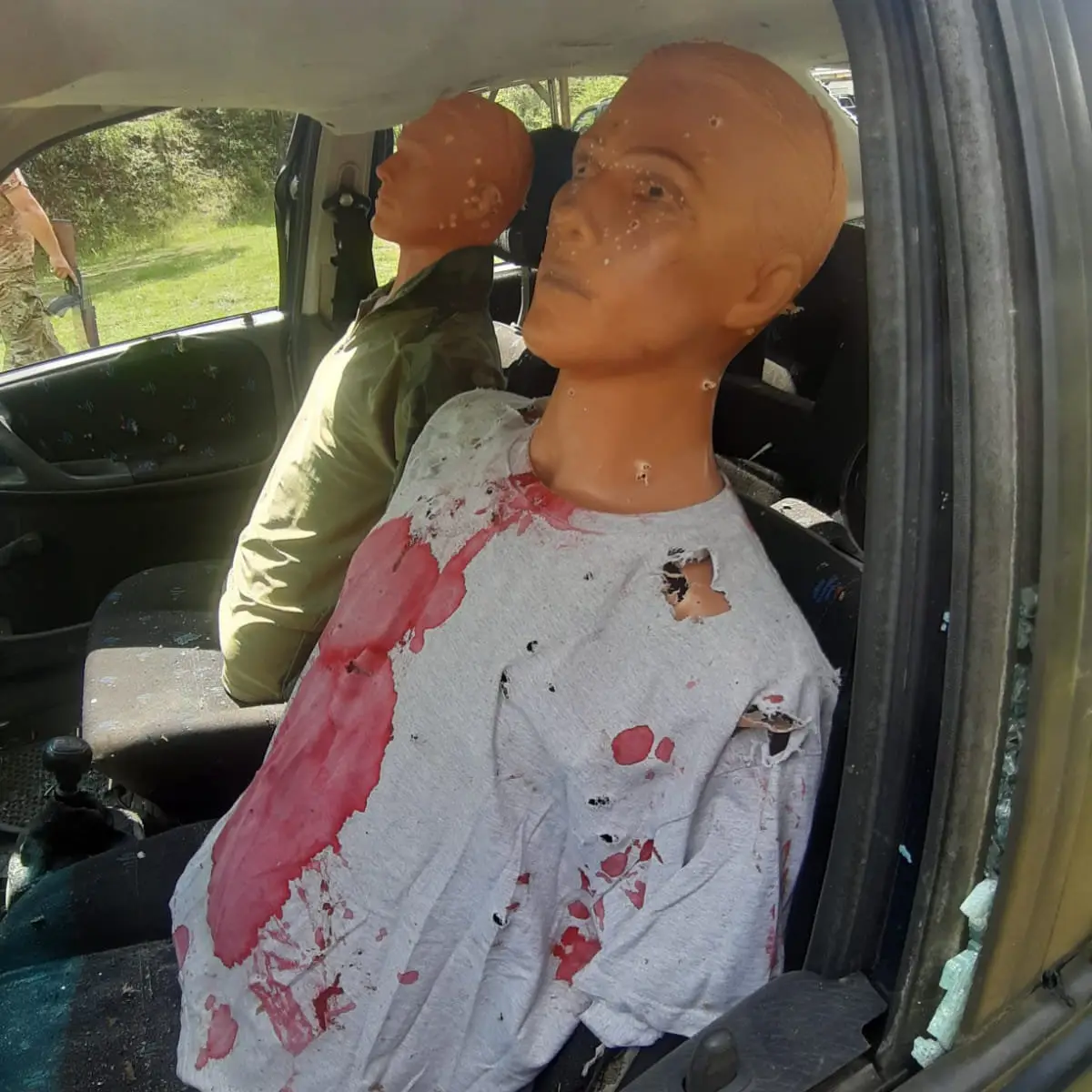
Close Quarters Battle Introduction is a two-day advanced course conducted on a closed tactical range. You will learn room entry and clearing procedures, weapon manipulation in confined spaces, immediate threat assessment and team communication basics.
This course is physically demanding and mentally intense. Participants must be proficient with a pistol before attending. Access is by application only — we screen every candidate to ensure group safety and course quality.
Training agenda
CQB principles & safety brief
Geometry of rooms, fatal funnel, angles of entry, range-specific safety rules
Weapon handling in confined space
Short-stocking, retention position, muzzle awareness drills
Lunch
Entry fundamentals — solo
Dynamic vs. deliberate entry, door mechanics, threshold assessment
Two-man entry basics
Button-hook and cross entry, communication signals
Room clearing sequences
L-shaped, T-shaped, complex rooms — progressive complexity
Lunch
Scenario exercises
Full runs with debrief after each — what worked, what failed
Final assessment & debrief
Individual and team feedback
Requirements
- Completion of Dynamic Pistol L2 or demonstrated equivalent
- Application form + CV required before booking
- Minimum 2000 rounds fired documented experience
- Law enforcement or documented legitimate civilian purpose
- No criminal record — screening applies
What's included
- Ammunition (approx. 300 rds)
- Closed tactical range access
- Safety equipment
- Certificate of completion
- Confidential debrief document
What to bring
- Pistol + minimum 3 magazines
- Holster with Level II retention
- Knee and elbow pads (mandatory)
- Plate carrier or chest rig optional
- Two days of food and water